






















Camera Memory Cards for Photography and Video
Camera memory cards are storage solutions that allow photographers and videographers to capture and store photos and videos on their digital cameras. They also provide an easy way to transfer media to external storage devices like computers, phones, and external hard drives for frequent backups.
Types of Camera Memory Cards
Several memory card formats serve different cameras and workflows.Secure Digital (SD) cards remain the most common format, available in standard SD, Secure Digital High Capacity (SDHC), and SDXC variants.Compact Flash (CF) cards still serve many professional DSLRs and cinema cameras.XQD cards offer larger capacity and faster speeds than SD cards, while CFexpress cards represent the latest standard in high-speed camera storage.
CFexpress cards come in Type A and Type B form factors. Type B cards, used by cameras from Canon, Nikon, and Blackmagic, offer higher maximum speeds due to their dual PCIe lane design. Type A cards, used primarily in Sony Alpha cameras like the A7 IV and A1, provide a smaller form factor while maintaining speeds sufficient for 8K video recording.
The CFexpress 4.0 specification, released in late 2023, doubles the performance of previous CFexpress 2.0 cards. CFexpress 4.0 Type B cards from manufacturers like ProGrade Digital and Delkin Devices deliver read speeds up to 3,650MB/s, write speeds up to 3,240MB/s, and sustained write speeds up to 2,400MB/s. These cards leverage PCIe Gen 4 interconnect with NVMe 1.4c host controller interface and remain backward compatible with CFexpress 2.0 cameras and readers.
How to Choose a Memory Card for a Camera
When choosing a memory card, pay attention to storage capacity, read and write speeds, card class, and camera compatibility. Camera memory cards range from a few gigabytes (GB) to several terabytes (TB). Select the storage capacity based on your camera's file format, resolution, and shooting requirements.
Read speed determines how quickly you can transfer files from card to computer. Write speed affects how quickly your camera can save images and video to the card. Sustained write speed matters most for video recording, as it indicates the minimum speed the card can maintain during continuous capture. Look for Video Performance Guarantee (VPG) ratings when shooting high-bitrate video formats.
Different cameras support different memory card types and storage capacities. Check your camera manual or contact the manufacturer to see which size and type of memory card fits your device.
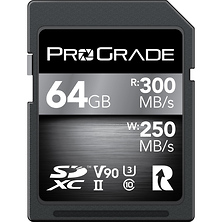
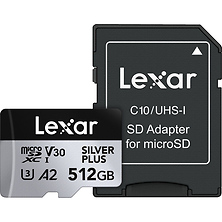
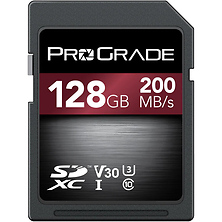
Digital camera memory cards are labeled with class speed ratings that state their minimum write speed. Memory card manufacturers differentiate their cards with different speed classes, including Class 2, Class 4, Class 6, and Class 10. UHS Speed Class (U1, U3) and Video Speed Class (V30, V60, V90) ratings provide additional guidance for video recording requirements. The higher the class number, the faster the data transfer.
For 4K video at standard frame rates, V30 cards typically provide adequate performance. Shooting 4K at 120fps or 8K video often requires V60 or V90 rated cards. Cinema cameras recording in RAW formats may demand CFexpress cards with sustained write speeds of 400MB/s or higher.
At Samy's, we offer memory cards from trusted brands built to withstand temperature variations, moisture, and shock. You'll find memory cards labeled with terms like waterproof, shockproof, and x-ray proof from brands like SanDisk, Sony, and ProGrade Digital.
Frequently Asked Questions
How To Format an SD Card for a Camera
Insert the SD card into the camera. Access the settings and look for the "Format" option. Follow the onscreen prompts after selecting this option. When prompted, confirm the formatting process. After it's finished, the SD card is ready to use in your camera. Formatting erases all data on the card, so back up your files before formatting if the card has been previously used.
Is a 128GB Memory Card Enough for a Camera?
For most photographers shooting JPEGs or compressed video, a 128GB memory card provides plenty of storage. If you frequently shoot in high-resolution formats like RAW or record 4K and 8K video, you may require larger storage capacities. A single hour of 4K video at 400Mbps consumes approximately 180GB of storage.
What Is a Memory Card Reader?
Devices used to transfer photos and videos between digital camera memory cards and compatible storage devices are known as memory card readers. The memory card reader connects to computers and external devices through USB or another cable interface. Card readers feature ports where you insert your camera media cards, access the data, and transfer files quickly to back up media captured on your camera.
Can I Recover Deleted Pictures from My Camera Memory Card?
It may be possible to recover media from your memory card with data recovery software if the data has not been overwritten. Stop using the memory card immediately if you want to attempt recovery to avoid overwriting data. Back up your photos and videos regularly to prevent losing images and footage.
Can You Use a Camera Without a Memory Card?
In most cases, cameras require a memory card to capture and store footage or images. Some cameras have limited internal memory that allows capturing a small number of photos without a card, but this varies by model. Think of the memory card as a roll of film that stores your work.
Do Camera Memory Cards Wear Out?
Memory cards have limited lifespans that vary depending on card quality. Most cards last several years with careful handling. Frequent formatting and read-write transfers gradually wear the card over time. Keep backup cards on hand in case you experience memory card failure, and replace cards that show signs of corruption or slow performance.
What Is the Difference Between CFexpress 2.0 and 4.0?
CFexpress 4.0 doubles the theoretical maximum bandwidth of CFexpress 2.0 by using PCIe Gen 4 instead of PCIe Gen 3. For Type B cards, this means theoretical speeds up to 4,000MB/s compared to 2,000MB/s with CFexpress 2.0. Real-world sustained write speeds on CFexpress 4.0 cards reach 2,400MB/s or higher, supporting high-bitrate cinema formats and extended recording sessions. CFexpress 4.0 cards are backward compatible with CFexpress 2.0 cameras and readers, though they will operate at 2.0 speeds when used in older devices.
Shop Memory Cards at Samy's Camera
Samy's Camera carries memory cards for every camera system and workflow. From SD cards for everyday shooting to CFexpress 4.0 cards for professional cinema work, our selection includes trusted brands like SanDisk, Sony, ProGrade Digital, Lexar, and Delkin Devices. Expert advice and fast shipping are available on every order.