












Professional Camcorders for Broadcast, Documentary, and Event Production
Professional camcorders** combine 4K recording, large sensors, and broadcast-standard connectivity in integrated packages designed for video production work. Whether you're covering live events, shooting documentaries, producing corporate videos, or gathering news, professional camcorders deliver the image quality, audio capability, and workflow integration that working videographers depend on.
Unlike cinema cameras that require separate lenses and rigging, professional camcorders offer all-in-one solutions with built-in optical zoom lenses, XLR audio inputs, and ergonomic designs optimized for handheld and shoulder-mounted operation. This makes them practical choices for productions where mobility, quick setup, and reliable performance matter.
Key Features of Professional Camcorders
Professional camcorders share several defining characteristics that separate them from consumer video equipment. Large sensors ranging from 1/2-inch to 1-inch provide improved low-light sensitivity and shallow depth-of-field control. Integrated optical zoom lenses cover wide-angle to telephoto ranges in a single unit, eliminating the need to carry multiple lenses.
Recording formats include broadcast-standard codecs like XAVC, AVC-Intra, and ProRes, with many models supporting 10-bit 4:2:2 internal recording for color grading flexibility. Connectivity options typically include SDI output for broadcast infrastructure, HDMI for external monitors and recorders, and timecode I/O for multi-camera synchronization.
- 4K UHD and DCI 4K recording at up to 60p (120p on select models)
- Large sensors (1/2-inch, 2/3-inch, or 1-inch) for improved image quality
- Integrated optical zoom lenses with 12x to 24x magnification
- Dual XLR audio inputs with 48V phantom power
- SDI and HDMI video outputs for monitoring and external recording
- ND filters (built-in or electronic variable)
- Professional codec support: XAVC, AVC-Intra, HEVC, ProRes
- Direct streaming capability via RTMP, SRT, or NDI protocols
Sensor Sizes and Image Quality
Sensor size directly affects image quality in professional camcorders. 1-inch sensors offer the best balance of light gathering and depth-of-field control in the handheld camcorder category. These sensors deliver approximately 2.5 stops of improvement over smaller 1/2-inch sensors in low-light conditions, making them suitable for event coverage in challenging lighting.
Three-chip designs using separate sensors for red, green, and blue channels provide superior color accuracy and reduced noise compared to single-sensor designs. This approach remains popular in broadcast applications where color fidelity is critical. Single-sensor camcorders with advanced processing can achieve comparable results while reducing size and cost.
Professional Camcorders by Brand
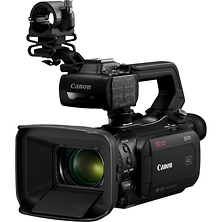
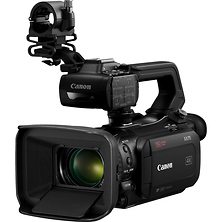
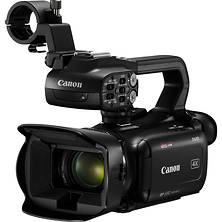
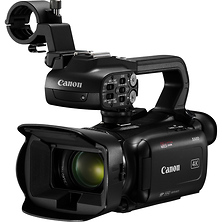
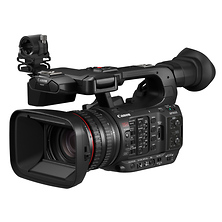
Canon's XA series camcorders feature Dual Pixel CMOS AF for responsive autofocus tracking during documentary and event work. The Canon XA75 pairs a 1-inch sensor with 15x optical zoom and dual XLR inputs, while the XA65 offers similar features with oversampled HD output in a compact form factor.
Sony XDCAM and NXCAM camcorders include AI-powered autofocus that recognizes and tracks human subjects in real-time. Models like the PXW-Z200 and HXR-NX800 feature 1-inch sensors with 20x optical zoom and support for S-Cinetone and S-Log3 color profiles that match footage with Sony Alpha and Cinema Line cameras.
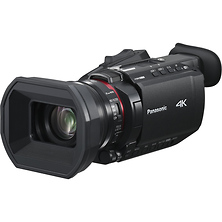
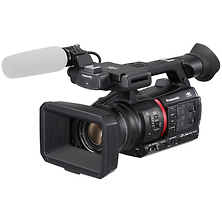
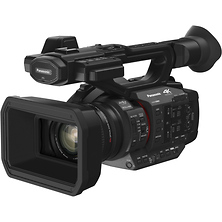
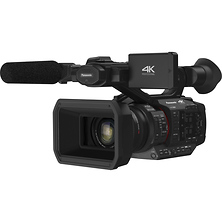
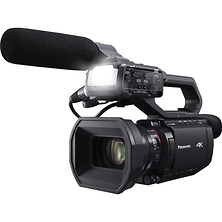
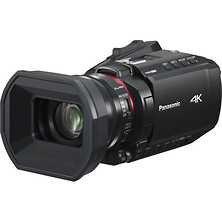
Panasonic professional camcorders offer wide-angle 25mm lenses with 24x optical zoom, reaching 600mm equivalent at the telephoto end. The AG-CX series supports NDI HX2 for IP-based transmission and P2 MXF format for broadcast station editing systems.
JVC GY-series camcorders provide cost-effective professional options with features like integrated streaming, 4K recording, and XLR audio at accessible price points for educational institutions, houses of worship, and corporate video departments.
Audio Capabilities for Professional Production
Professional audio is standard across the camcorder category. Two XLR inputs with switchable phantom power accommodate shotgun microphones, lavaliers, or line-level sources from audio mixers. Built-in directional microphones handle ambient audio when external mics are impractical. Multi-channel recording captures separate tracks for mixing flexibility in post-production.
Audio level controls, headphone monitoring, and on-screen audio meters allow real-time adjustment during recording. Some models include limiters and noise reduction to handle unpredictable sound environments. For expanded audio capture, look for camcorders with additional 3.5mm inputs or wireless receiver compatibility.
Recording Formats and Workflow Integration
Professional camcorders support multiple recording formats to match different delivery requirements. Intra-frame codecs like XAVC S-I and AVC-Intra offer high-quality 10-bit 4:2:2 recording for post-production work. Long GOP formats like XAVC HS (H.265) and XAVC S (H.264) provide efficient file sizes for longer shoots without sacrificing resolution.
Dual card slots enable relay recording for extended capture, simultaneous backup recording, or proxy file generation. Memory options include CFexpress Type A, SD UHS-II, and proprietary formats depending on the manufacturer. For 4K recording at high bitrates, use memory cards rated for the required write speed.
Streaming and Remote Production
Built-in streaming capability has become standard in professional camcorders. Wi-Fi and wired ethernet connections support direct streaming to platforms via RTMP, RTMPS, and SRT protocols. NDI support on select models enables IP-based video transmission over standard network infrastructure without dedicated video cables.
Remote control apps allow adjustment of camera settings, monitoring, and file transfer from smartphones or tablets. This proves useful for solo operators managing multiple cameras or for situations where the camera is positioned in difficult-to-reach locations.
Who Uses Professional Camcorders
News organizations rely on professional camcorders for their speed and reliability in the field. The all-in-one design allows journalists to capture broadcast-quality footage without rigging or extensive setup. Weatherproof construction and long battery life support extended outdoor assignments.
Event videographers covering weddings, conferences, and live performances benefit from the long zoom reach and XLR audio inputs. The ability to capture wide establishing shots and tight details from a single position reduces the need for multiple cameras or repositioning during critical moments.
Documentary filmmakers appreciate the unobtrusive profile of handheld camcorders. Smaller form factors draw less attention from subjects compared to cinema camera rigs, making them practical for interview work, verité shooting, and travel documentaries.
Corporate video departments use professional camcorders for training videos, internal communications, and live streaming to remote employees. The straightforward operation and professional output quality make them accessible to operators without specialized cinematography backgrounds.
Frequently Asked Questions
What is the difference between a camcorder and a cinema camera?
Professional camcorders integrate the lens, sensor, recording media, and often XLR audio into a single unit optimized for handheld operation and quick deployment. Cinema cameras like those in the digital cinema cameras category feature interchangeable lens mounts, larger sensors, and modular designs that allow customization for specific production needs. Choose a camcorder when mobility and all-in-one convenience matter; choose a cinema camera when you need maximum image quality and lens selection.
Do professional camcorders have image stabilization?
Yes. Professional camcorders include optical image stabilization in the lens, which reduces camera shake during handheld shooting and maintains stability during zoomed compositions. Some models add electronic stabilization modes for additional smoothing during movement. Combined with autofocus tracking, this allows reliable focus and framing while following subjects.
Can professional camcorders stream live without a computer?
Many current professional camcorders include built-in Wi-Fi with support for RTMP, RTMPS, and SRT streaming protocols. You can stream directly from the camera to platforms like YouTube, Facebook, or custom RTMP servers using Wi-Fi or wired ethernet adapters. This eliminates the need for encoding hardware or streaming software on a separate computer.
What recording formats do professional camcorders support?
Professional camcorders typically support multiple codec options including XAVC (Sony), AVC-Intra/AVC-LongG (Panasonic), and XF-AVC (Canon). Recording quality ranges from highly efficient Long GOP compression to high-quality All-Intra frame recording with 10-bit 4:2:2 color depth. Many models also support HEVC/H.265 for efficient 4K capture and MP4 containers for simplified file handling.
How long can professional camcorders record continuously?
Recording time depends on memory card capacity, selected recording format, and battery life. Most professional camcorders support relay recording across dual card slots for uninterrupted capture. High-capacity batteries can power 3-6 hours of continuous recording, and external power options extend operation for all-day shoots. Unlike many mirrorless cameras, professional camcorders are designed for continuous operation without overheating or time limits.
Shop Professional Camcorders at Samy's Camera
Professional camcorders deliver broadcast-quality imaging, XLR audio, and streaming capability in integrated packages built for working videographers. Whether you need a palm-sized unit for news gathering, a shoulder-mount camera for documentary work, or a streaming-ready camcorder for live events, Samy's Camera carries models from Canon, Sony, Panasonic, and JVC to match your production requirements. Browse our selection of video and audio equipment, gimbals for stabilized movement, and video lighting to complete your production kit.