







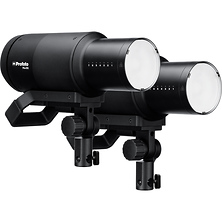
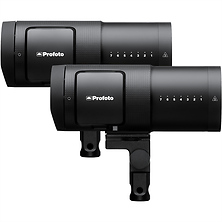

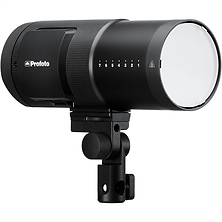









Strobe Lighting for Professional Studio and On-Location Shoots
Strobe lighting delivers the consistent, high-powered flash output that portrait, product, and commercial photographers depend on. Unlike continuous lighting sources, strobes fire in brief, powerful bursts that freeze motion, overpower ambient light, and produce sharp, well-exposed images in controlled environments. For photographers who need repeatable results across long sessions, strobes provide the color consistency and output control that continuous sources struggle to match.
Types of Strobe Lighting Systems
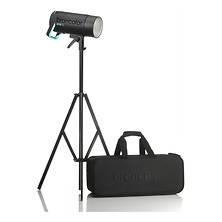
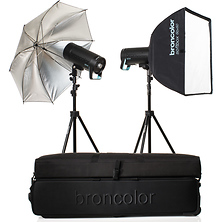
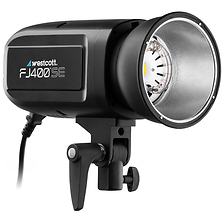
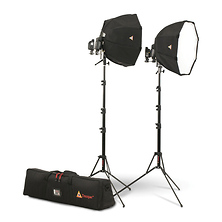
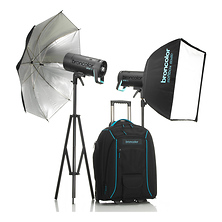
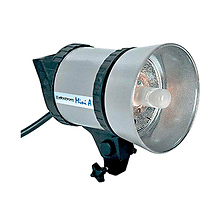
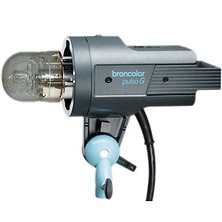
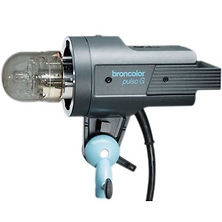
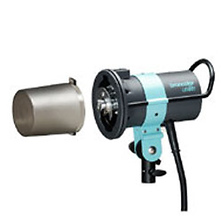
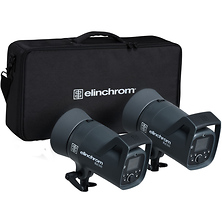
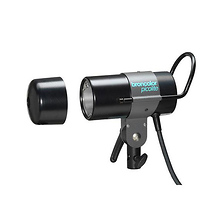
Strobe lighting falls into two main categories: monolights and pack-and-head systems. Monolights combine the power supply and flash head in one unit, making them portable and straightforward to set up. Pack-and-head systems separate the power supply from the flash heads, allowing you to run multiple heads from a single generator with precise power distribution. Both approaches have their place depending on your shooting style, location requirements, and power needs.
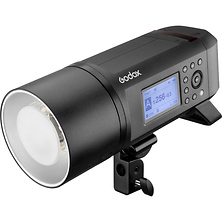
Within these categories, you'll find AC-powered studio strobes designed for fixed locations and battery-powered portable strobes built for on-location work. Many photographers keep both in their kit, using studio units for controlled environments and battery-powered options when shooting on location or in spaces without reliable power access.
What Makes Strobe Lighting Different from Continuous Light
Strobe lighting provides a powerful flash of light with adjustable output, fast recycle times, and consistent color temperature. Whether you prefer monolights or pack-and-head systems, strobe lighting is essential for capturing sharp, well-lit images in controlled environments.
The primary advantage of strobes over continuous lighting comes down to output efficiency. A 500Ws strobe can overpower midday sun for outdoor portraits, while achieving equivalent brightness with continuous light would require fixtures drawing thousands of watts. Strobes also generate less heat during extended sessions, making them more comfortable for subjects and safer around heat-sensitive modifiers.
Key Specifications to Consider
When selecting strobe lighting, pay attention to watt-seconds (Ws), which indicates maximum power output. For studio portraits, 250-500Ws handles most situations comfortably. Commercial and fashion work often requires 600-1200Ws or more, especially when shooting through large modifiers or overpowering bright ambient conditions.
Recycle time determines how quickly the strobe recharges between flashes. Fast recyclers (under one second at full power) support rapid-fire shooting styles and action sequences. Flash duration affects motion-freezing capability, with shorter durations (1/5000 second or faster) stopping fast movement without blur.
Color temperature consistency matters for maintaining accurate skin tones across an entire shoot. Professional-grade strobes hold tight color temperature tolerances (typically within ±75K) regardless of power setting, eliminating the need for constant white balance adjustments.
Compatible Gear and Accessories
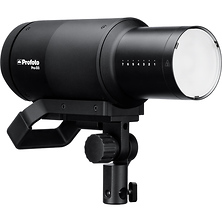
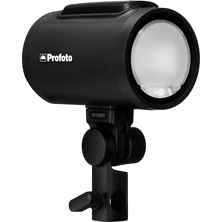
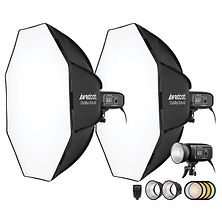
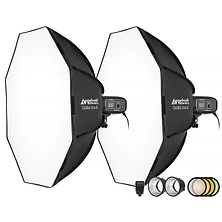
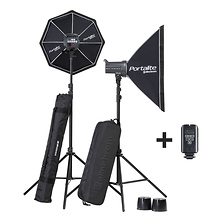
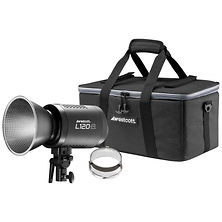
Build the perfect strobe setup with Monolight Strobe Heads & Kits for all-in-one studio solutions, or go mobile with Portable Strobe Lighting. For custom lighting arrangements, explore standalone Strobe Flash Heads.
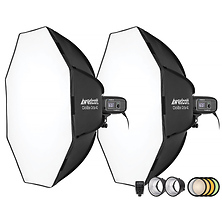
Light modifiers transform raw strobe output into shaped, controlled illumination. Softboxes and umbrellas create diffused, flattering light for portraits. Grids and snoots narrow the beam for dramatic accent lighting. Reflectors redirect spill light and fill shadows. Most strobes accept standard Bowens-mount modifiers, though some brands use proprietary mounting systems.
Light stands and grip equipment support your strobes at the angles and heights your shots require. Boom arms extend lights over subjects without stands entering the frame. Wireless triggers fire strobes remotely, freeing you from sync cables and enabling complex multi-light setups.
FAQs About Strobe Lighting
What is the difference between strobe lighting and continuous lighting?
Strobe lighting emits short, powerful bursts of light, while continuous lighting stays on. Strobes provide sharper images and better control in studio environments.
Can strobe lights be used outdoors?
Yes. Many portable strobes run on rechargeable batteries and deliver enough power to balance with or overpower daylight. Battery-powered units from brands like Profoto, Godox, and Westcott offer 300-600Ws output with hundreds of full-power flashes per charge, making them practical for location portraits, outdoor events, and remote shoots.
Do I need modifiers with strobe lighting?
Light modifiers like softboxes, reflectors, and grids are commonly used with strobes to shape light, soften shadows, and create dynamic effects.
How do I trigger strobes wirelessly?
Wireless triggers use radio signals to fire strobes without physical sync cables. Most systems include a transmitter that mounts on your camera's hot shoe and receivers built into the strobes or attached externally. TTL-capable triggers can also communicate exposure information between camera and strobe for automatic flash metering. TTL (Through The Lens) works by firing a quick pre-flash that the camera measures to calculate correct flash power automatically, making it ideal for run-and-gun shooting where manual adjustments aren't practical.
Shop Strobe Lighting at Samy's Camera
Whether you're building your first studio kit or expanding a professional lighting arsenal, Samy's Camera carries strobe lighting solutions from Profoto, Godox, Westcott, Broncolor, Elinchrom, and other trusted brands. Our staff includes working photographers who can help you match the right strobe system to your shooting style and budget. Shop online with fast shipping or visit one of our Southern California locations to see strobes in action before you buy.